Why bilingual play beats flashcards every time
If you've ever bought a pack of flashcards hoping to 'teach' your toddler Spanish and watched them ignore the pack within a week — you weren't doing it wrong. Toddlers don't learn language from cards. They learn it from contexts that matter to them.
How toddlers actually acquire a second language
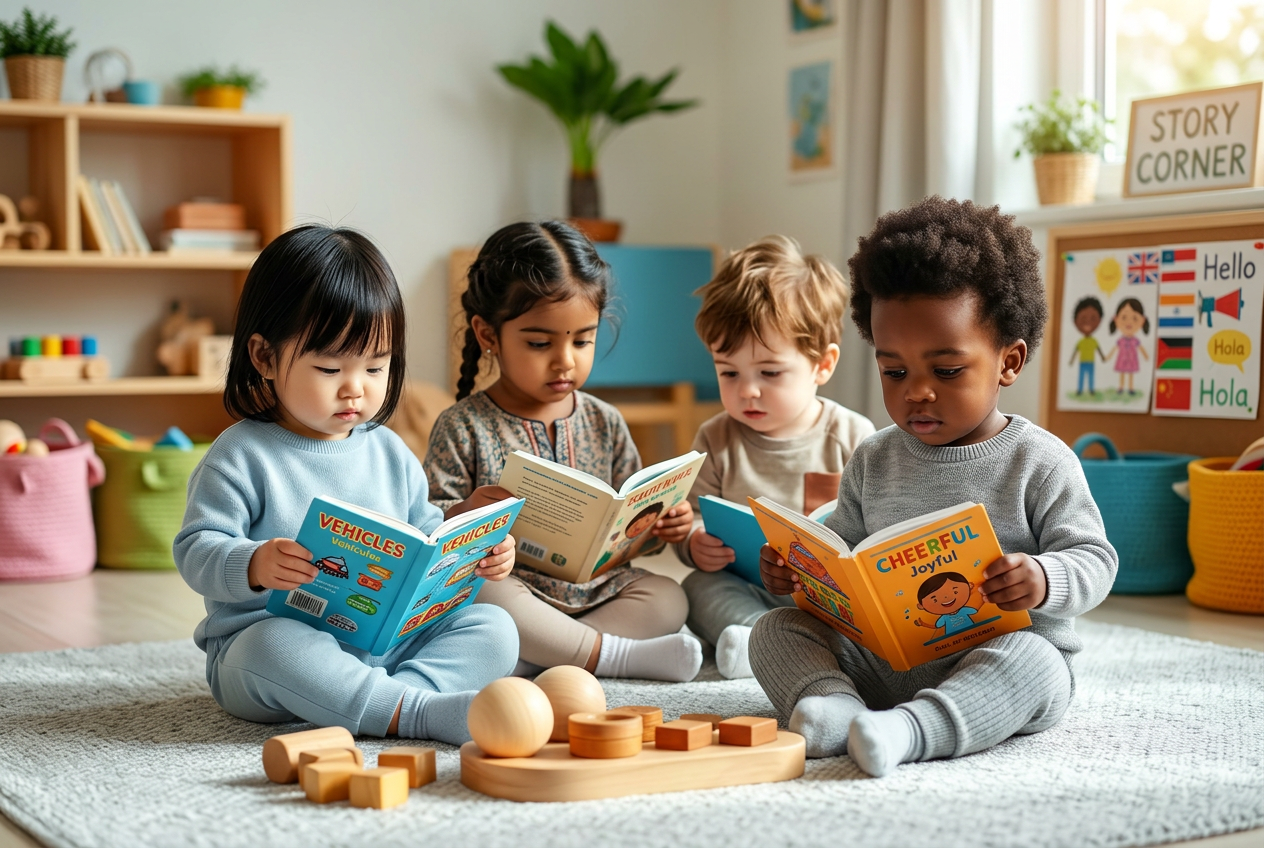
The research is remarkably consistent: children under 7 acquire languages through meaningful interaction, not through explicit instruction. They need to hear the language used by a person they're connected to, attached to a real situation, with feedback. Flashcards offer none of those three.
Why play wins
Play creates the three things flashcards lack — meaning, repetition without boredom, and emotional engagement. When a 3-year-old hears 'agua' twenty times while pouring water into cups, the word is wired to a physical sensation. When the same child sees 'agua' on a card twenty times, the word is wired to… a card.
What the science calls 'rich input'
Linguists use the term 'rich input' to describe language that comes with gesture, eye contact, real objects and a clear social purpose. Sensory play is rich input by default. Flashcards are 'thin input' — accurate but stripped of everything that helps the brain hold on.
What you can do at home, today
Pick one routine — snack, bath or getting dressed — and make it 100% Spanish for two weeks. Use the same 8 to 12 phrases every time. After 14 days your child will start responding in Spanish at that moment, even if the rest of the day is in English.
When flashcards do help
From around age 6, once a child is reading, flashcards become useful for consolidating vocabulary they already understand. Before that age they're a memory aid for parents, not a learning tool for children. Save your money and buy more wooden spoons.
Children don't learn Spanish from cards. They learn it from people they love, doing things that matter, in moments they want to repeat.