
What Neuroscience Tells Us About the First 3 Years of Brain Development
Between birth and age three, a child's brain grows faster than at any other point in their life. It's a period when everyday experiences — a shared song, a splash of water, a new texture — help shape the neural architecture that supports learning, language and emotion for years to come. Understanding what's actually happening inside those tiny heads can change how we play, talk and connect with our little ones.
A brain built by experience
In the first three years, the brain forms new synaptic connections at an extraordinary rate — far more than it will ever need. Which connections stay and which get pruned depends largely on which ones are used. Repeated, meaningful experiences — being spoken to, held, played with, read to — strengthen the pathways that support language, movement and social skills. Neuroscientists call this 'experience-dependent' brain development, and it's why the small, everyday moments matter more than any single toy or app.
Language: a sensitive period wide open
The early years are widely recognised as a sensitive period for language acquisition. Babies and toddlers are wired to tune into the sounds, rhythms and patterns of the languages spoken around them. Before their first birthday, they've already begun narrowing their attention to the sounds of their home languages. This is why exposing children to a second language early — through conversation, songs and play, not drills — is so effective: their brains are already primed to absorb it.
Why sensory play punches above its weight
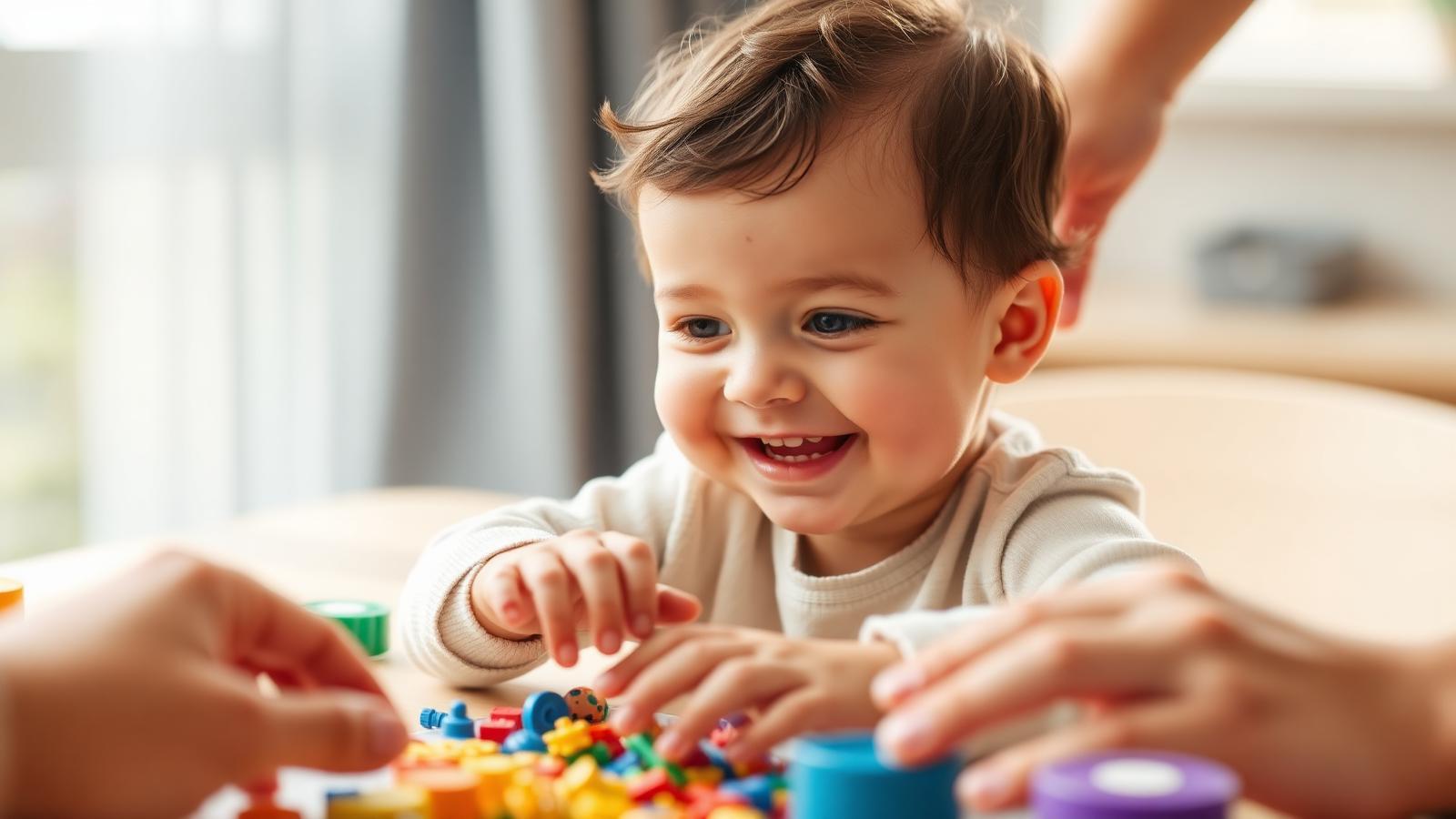
Touch, smell, sight, sound and movement don't just entertain a toddler — they build the brain. Sensory experiences activate multiple regions of the brain at once and help integrate them, supporting motor coordination, attention and language. When a child scoops rice, squishes dough or splashes water while an adult narrates what's happening, they're stitching together sensation, action and words in the same moment. That's the kind of rich, multi-modal input the developing brain thrives on.
Repetition isn't boring — it's how learning sticks
Toddlers ask for the same book, the same song, the same game over and over for a reason. Repetition strengthens neural pathways, making patterns more predictable and freeing up mental space to notice new details. Reading the same story for the fifth night in a row isn't a failure of variety — it's exactly how the brain consolidates language and understanding at this age.
Relationships are the real infrastructure
Warm, responsive interactions — often described by researchers as 'serve and return' — are one of the most important ingredients in healthy brain development. When a child babbles, points or reaches out and a caring adult responds with attention, words or a smile, it helps build the circuits involved in communication, emotional regulation and trust. No enrichment activity replaces the simple power of a present, engaged adult.
What this looks like at home
You don't need flashcards, screens or a curriculum. Talk to your child about what you're both doing. Sing together, even if you can't hold a tune. Offer safe, open-ended materials to explore. Repeat their favourite books. Follow their curiosity when they point at something. In a bilingual home, weave the second language into the same everyday routines — bath, snack, walk to the park — so it becomes part of life, not a lesson.
The most powerful thing you can do for a young child's developing brain isn't buying more — it's showing up, tuning in and playing along, one small everyday moment at a time.