
Our favourite colour-mixing activities
Colour mixing is the moment toddlers stop just looking at the world and start asking how it works. For 2- to 5-year-olds, it's also the perfect anchor for Spanish vocabulary: short words, repeated dozens of times, in an experience they want to do again and again.
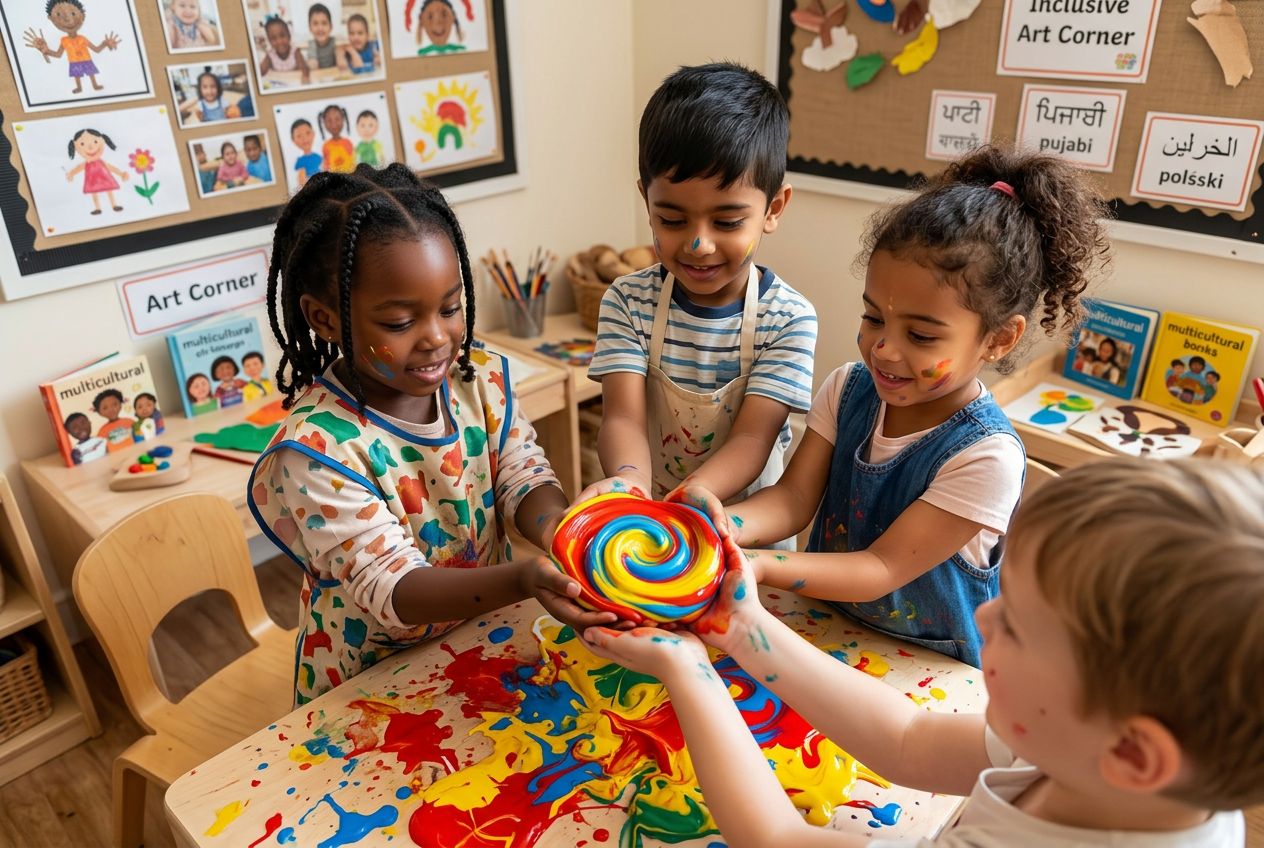
Activity 1 — Ice cube alchemy
Freeze cubes of coloured water (rojo, azul, amarillo) the night before. Drop two cubes into a clear glass and let your child watch them melt and mix. Narrate slowly: 'Rojo y amarillo… ¡naranja!' Repeat with every combination. This works because the change is slow enough for the child to track and predict.
Activity 2 — Pipette painting
Set up three small jars of coloured water, give your child a pipette and a sheet of white kitchen paper. They draw with the pipette, watch the colours bleed and mix, and you label each new shade as it appears. Verbs to use: 'aprieta', 'mezcla', 'mira'.
Activity 3 — Shaving foam swirls
A tray of white shaving foam plus a few drops of red and blue food colouring. Let them swirl with a spoon and watch purple appear out of nowhere. Best activity for the 'why?' age — they will ask you to repeat it five times in a row.
Why mixing teaches more than colour
Predicting what two colours will make is early scientific thinking: hypothesis, action, observation. Doing it in Spanish wires both pathways together, so the vocabulary sticks to the experience instead of floating on its own.
How to extend it next week
Once primary colours are solid, introduce 'claro' and 'oscuro' — add white or more colour to lighten or deepen. By age 4 most children can sort six shades and name them in Spanish if they've done these three activities a handful of times.
Three jars, one pipette and ten minutes a week is all it takes for your child to name six Spanish colours by their fourth birthday.