
How to make sensory rice at home (and why it works)
Sensory rice is the single most useful, low-cost play material you can keep in a cupboard. Five minutes to make, weeks of play, and the perfect base for introducing Spanish vocabulary to children from 2 to 5 years old.
The recipe (5 minutes)
Per 500g of dry white rice: 1 tablespoon of white vinegar plus 8–10 drops of natural food colouring. Mix in a zip bag, shake until evenly coated, spread on a tray and let it dry for 30 minutes. Make three colours and store separately in glass jars.
Why your child can't stop touching it
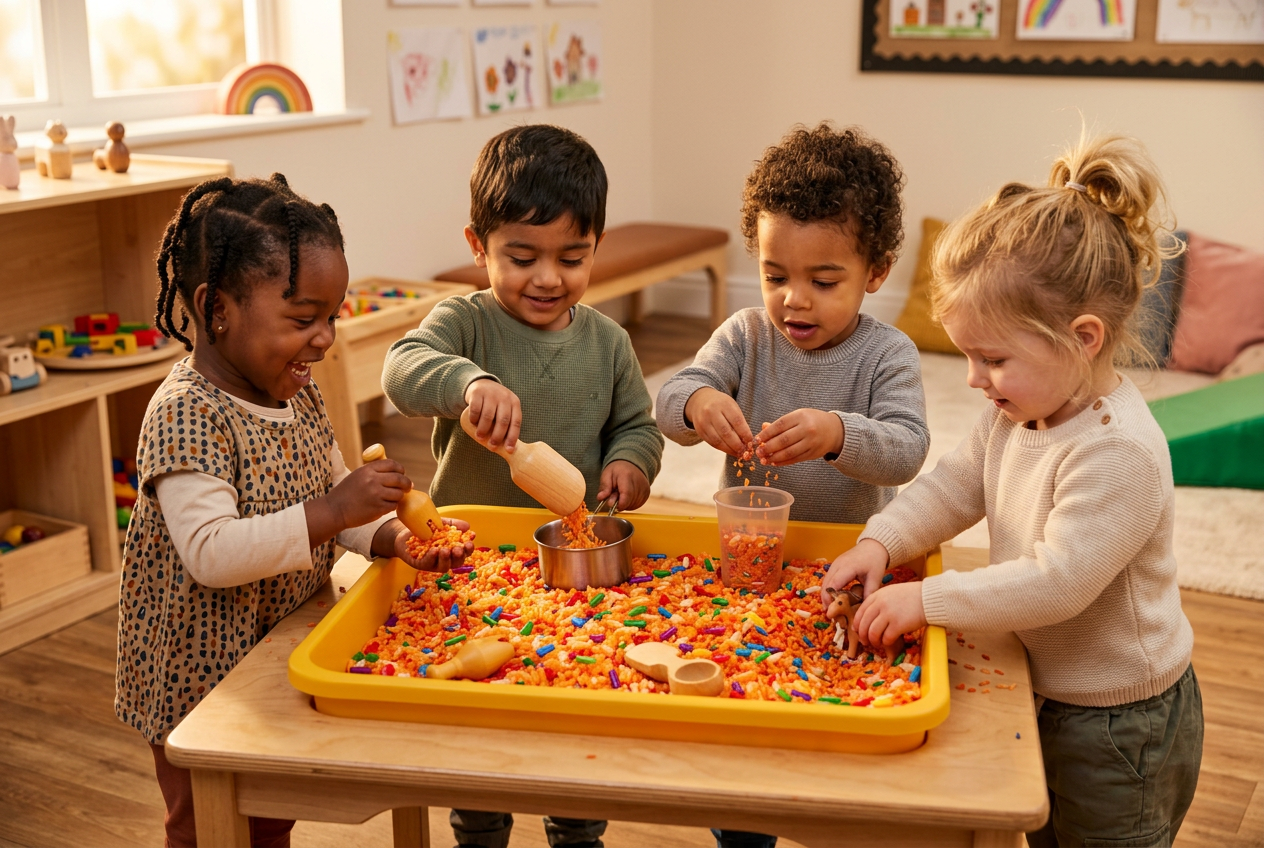
Rice activates the tactile and proprioceptive systems at the same time — pouring, scooping and squeezing give the nervous system the kind of regulated input that calms toddlers and sharpens focus. This is why a 'fussy' three-year-old will sit still for 40 minutes with a tray of rice.
The Spanish vocabulary it unlocks
Action verbs (echar, llenar, vaciar, esconder), textures (suave, áspero), quantities (mucho, poquito, más, menos) and colours (rojo, azul, amarillo). All of these are easier to learn through movement than from a flashcard.
Three games to try this week
1) Hide small wooden animals and call them out in Spanish as your child finds them. 2) Set up two bowls and practise 'lleno' and 'vacío'. 3) Give a teaspoon and a tablespoon and ask for 'mucho arroz' or 'poquito arroz' — perfect early maths plus Spanish in one activity.
Safety and storage
Taste-safe but not for under 18 months without close supervision. Store in airtight jars away from humidity and it will keep for 6 months. If it ever smells off, compost it — the natural dye is fully biodegradable.
One bag of rice, three colours and ten Spanish words is enough material for a full month of focused, screen-free play.