
What is tuff tray play? A beginner's guide
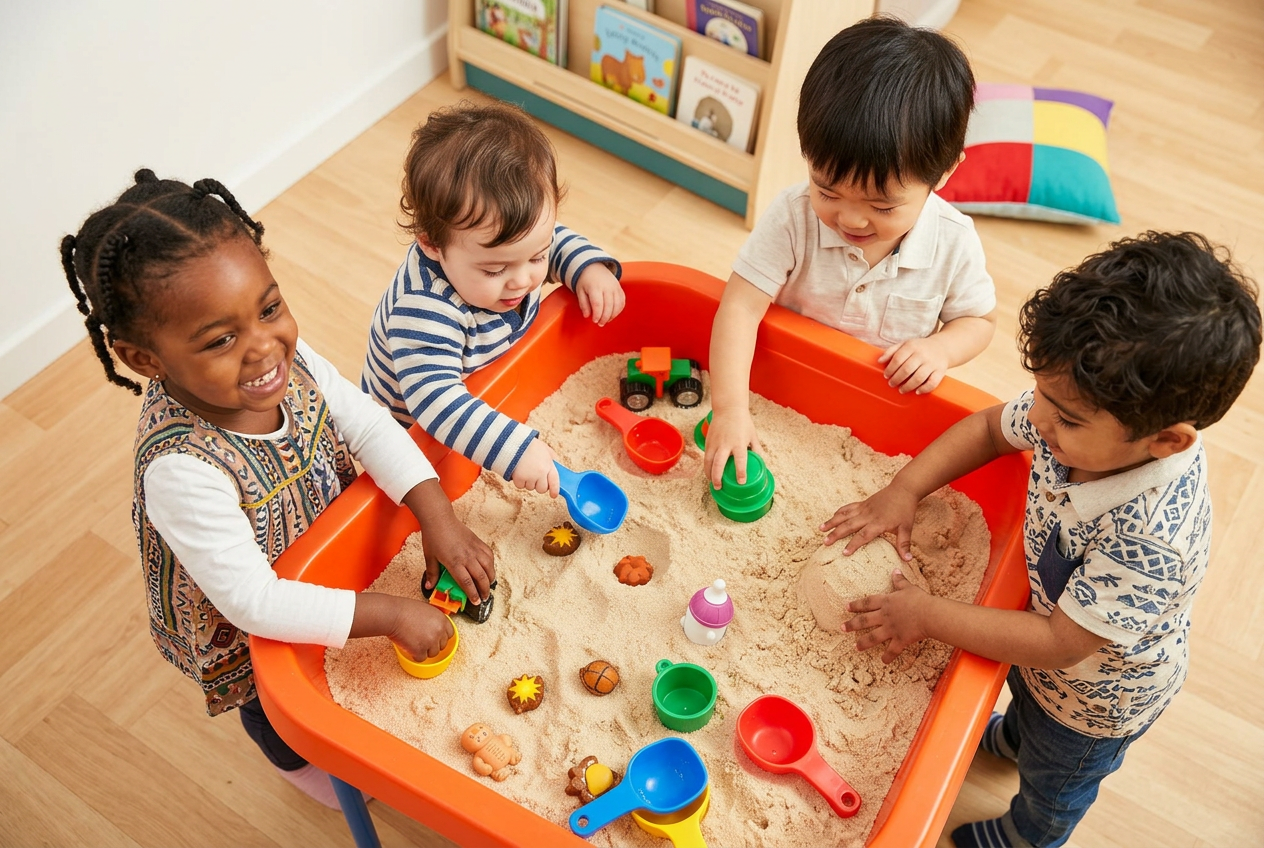
A tuff tray is just a shallow plastic tray, around 90 cm wide, with raised edges. That's it. But put one on the floor with a handful of materials and it becomes the most flexible, child-led play environment you can offer toddlers and preschoolers.
Why the shape matters
The low edges contain mess without containing the child. Two or three children can sit around the same tray and play in parallel, which is exactly how 2- to 4-year-olds prefer to socialise. The defined surface also gives the brain a clear boundary, which helps with focus.
What goes inside
Open-ended materials only: dried pasta, oats, water beads, fabric scraps, pine cones, wooden spoons, small jugs. No instructions, no 'right' answer. The child decides what the play is about — your job is to add language, not direction.
How to add Spanish without taking over
Narrate what they're already doing: 'Estás echando agua', 'Ahora mezclas', 'Mira, está lleno'. This is called 'parallel talk' and it's the single most evidence-backed technique for raising bilingual children. You're not teaching — you're labelling their world in Spanish.
Three themes to start with
1) Cocina — oats, jugs, spoons, empty herb jars. 2) Construcción — pebbles, small wooden blocks, toy diggers. 3) Naturaleza — leaves, pine cones, water, twigs. Each one carries 8–10 high-frequency Spanish words your child will hear repeatedly.
How long sessions should last
Plan for 30–45 minutes, but follow the child. Some days they'll stay for an hour. Some days they'll leave after 10 minutes — and that's still a successful session. Long focused play is built one short session at a time.
A tuff tray is not a toy — it's a stage. You set it, your child writes the play, and you whisper the script in Spanish.